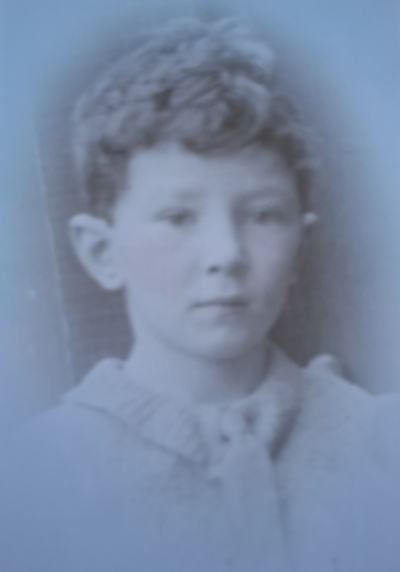
Christened John but always known by his middle name of Martin, Pratt was a gifted 880yard runner, succeeding at domestic level while rubbing shoulders with Olympians. His death from leukaemia at the age of just 26 years cut short any promises of what might have been.
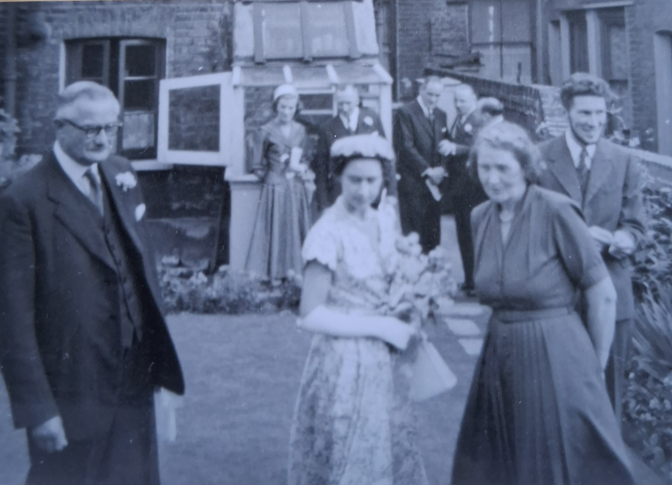
John H. Martin Pratt was born to Robert and Olive Pratt (nee Reeves) into a large extended Eastend family in London in January 1929. His mother was one of twelve siblings, born in Hoxton and married in Shoreditch at the age of 31. Pratt’s father Robert was strongly involved with the Transport Trade Unions in the 1920s and beyond. The family moved to North London in hope of better living conditions, coupled with a desire to “better themselves” – this meant elocution lessons for Martin. His mother Olive was a keen gardener, and this photograph of Martin as a young man, (far right of picture) was taken when his parents’ house was visited by Princess Margaret circa 1947.
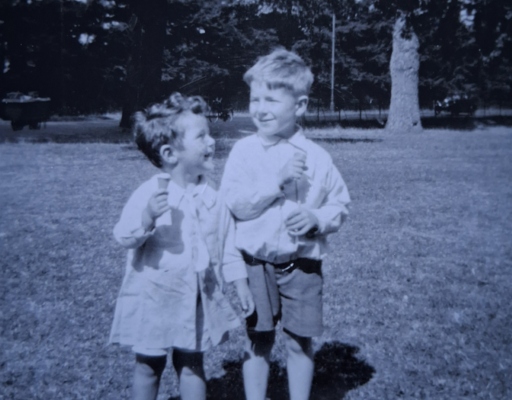
Images courtesy of Pratt Family.
Martin was 10 when war broke out in 1939. The family stayed in London throughout the War, and Pratt attended Dame Alice Owen’s School in Islington, where he was a prefect. As teenagers, Martin and his cousin Donald who lived in Hendon, North London, would watch the Luftwaffe drop bombs on the city and then leap on their bicycles and race off to see the damage and carnage, peddling towards the danger rather than away from it!
Still a teenager at the end of the War, as athletic competitions began to resume in the aftermath of the hostilities, Pratt discovered that he was a good ‘half-miler’, winning the London Amateur Athletic Championships North East London Men’s (Junior) titles in 1946 and 1947. His athletic endeavours continued as he undertook National Service with the Royal Tank Regiment. In 1949 he took part in the regiment’s Cross Country, won the Aldershot District Individual 880 yards and was part of the silver medal 4 x 880 yard team in the Army Corp Week Athletics Championships.
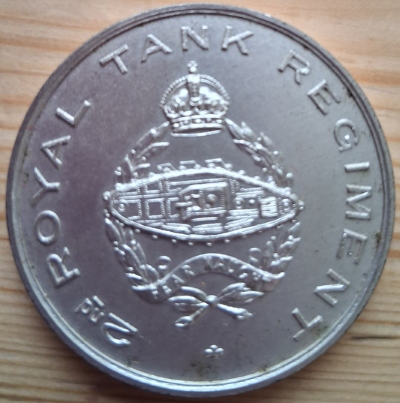
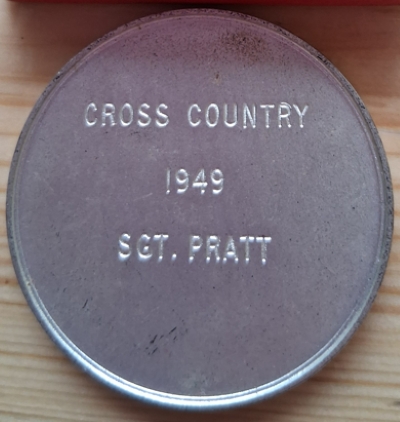
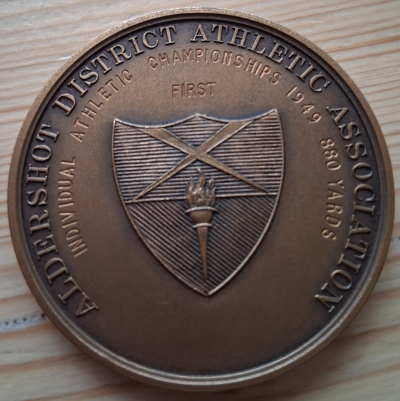
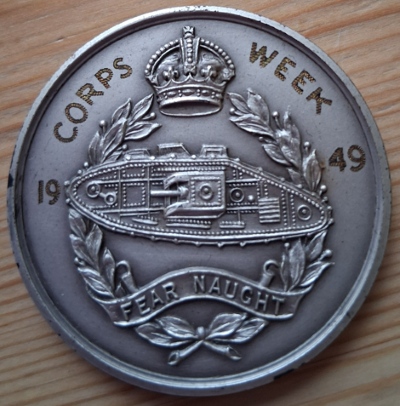
Bottom row left: Aldershot District Athletic Association medal for 880 yards 1949 in which Pratt came first.
Bottom row right: 1949 Corps Week medal. Pratt was a member of the winning 4 x 880 yard replay team.
Images courtesy of Pratt Family.
Back in London, Pratt, now a senior, carried on from where he’d left off as a junior, winning the North East London Men’s (Senior) 880 yard title in 1950, followed by the North East London Men’s (senior) 440 yard title in 1951. He took third place in the shorter distance in the Championships meeting of the same year.
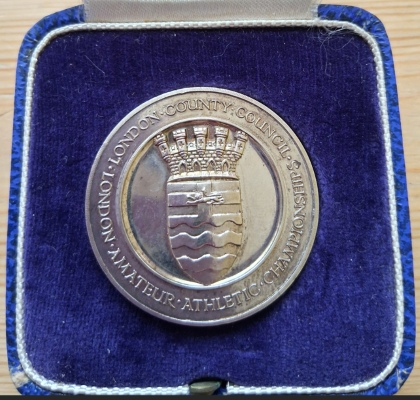
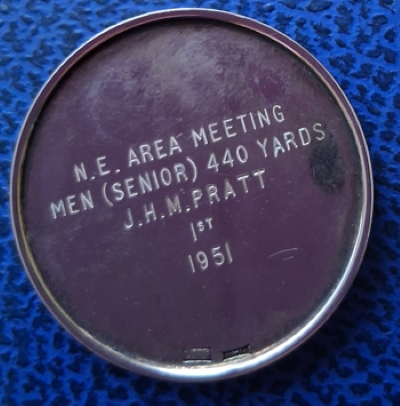
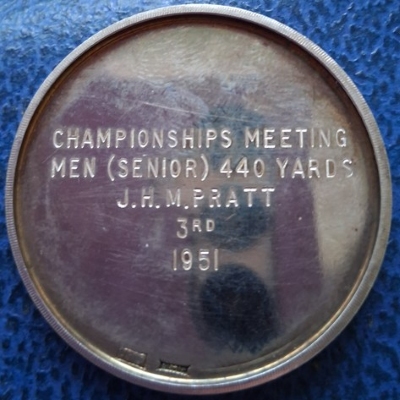
Images courtesy of Pratt Family.
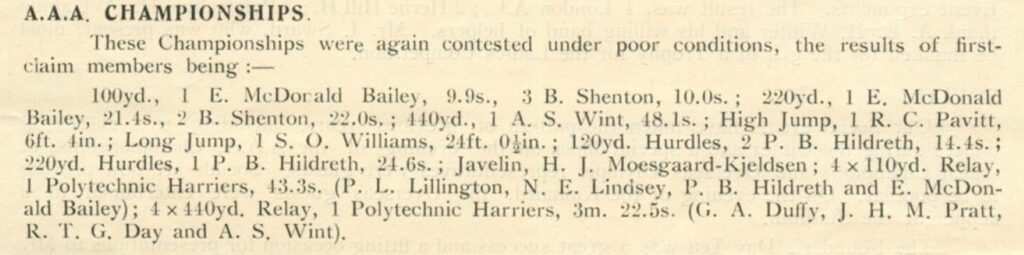
Now a member of Polytechnic Harriers, Pratt was a member of the team which won the 4×440 yard relay at the AAA Championships in 1952 in a time of 3 minutes, 22.5 seconds alongside G.A. Duffy, R.T.G. Day and Arthur S. Wint. Less than a month later Wint captained the Jamaican Team at the 1952 Helsinki Olympics where he was part of the 4x400m relay team who took gold in a world record time of 3 minutes 3.9 seconds. Wint was already an experienced Olympian and history maker by this point, he had captained Jamaica at the London 1948 Olympics winning Jamaica’s first Olympic gold medal in the 400m with a silver in the 800m. Wint was a long standing member of Polytechnic Harriers, he had served as a Flight Lieutenant in the RAF in the War before studying medicine at St. Bartholomew’s Hospital London and having a long career as a doctor in Britain.
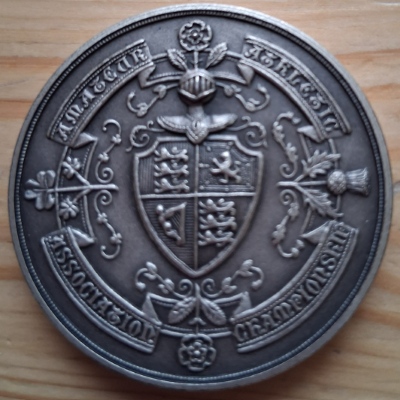
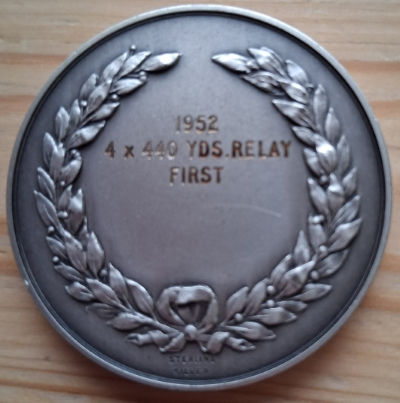
Images courtesy of Pratt Family.
Other notable Polytechnic Harriers in Pratt’s time include two-time Olympic sprinter E. McDonnald Bailey, who equalled American Jessie Owens’ 100m records of 10.2 seconds and took bronze at the 1952 Helsinki Olympic Games; long jumper Sylvanus Williams who captained the Nigerian Team at the 1952 Helsinki Olympics where he also took the bronze medal; British Sprinter Brian Shenton who represented Britain at the 1952 Helsinki Games, and would go on to represent them again at the 1956 Olympics in Melbourne; and hurdler Peter Hildreth who would go to the 1952 Helsinki Games, the 1956 Melbourne Games and the 1960 Rome Games for Great Britain.
All in all, eighteen members of Polytechnic Harriers completed at the 1952 Olympic Games, representing Great Britain, Jamaica, Nigeria, Gold Coast, Australia and Germany. Amongst these greats, Pratt got a mention in the club’s 1952 Annual Report on the “list of outstanding athletes” and is noted as one of the “half-milers…who broke 1m 57s during the summer”. Tragically, Martin developed Leukaemia and died in 1955 at the age of just 26. A life and an athletics career cut far too short.
With thanks to the family of J.H. Martin Pratt, and the National Union of Track Statisticians (NUTS) History Group.