A historic sprinting trophy’s year on tour to culminate at England Athletics Hall of Fame gala event this month
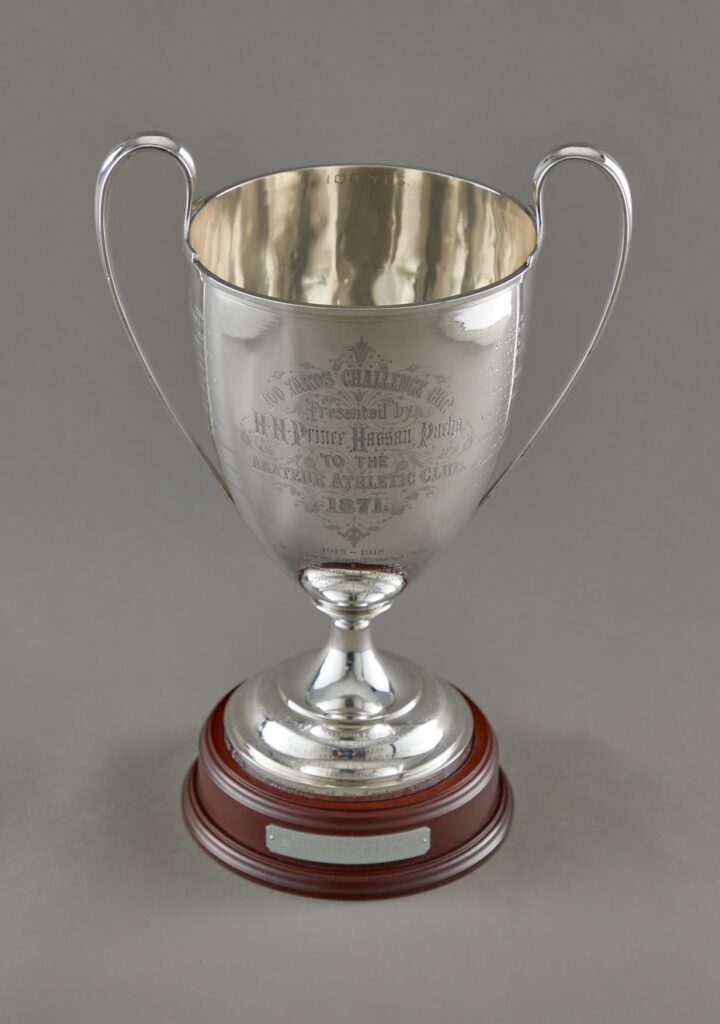
The Prince Hassan Pacha 100 Yard Trophy has been travelling the country and will finish a year of exhibitions by going on display at England Athletics’ Hall of Fame gala event this November where it will celebrate previous winner Harry Edward’s admission into the Athletics Hall of Fame.
The origins of the Hassan Pacha Trophy
Prince Hassan Pacha (1855-1888), the third son of Egypt’s ruler Khedive Ismail Pasha, gave this trophy whilst a student at Oxford University after attending the Amateur Athletic Club championships in 1871. The AAC, precursor to the Amateur Athletic Association (AAA) were formed in 1866 to put on athletic events for gentlemen amateurs. The AAA formed in 1880 and governed men’s athletics in England for the next 111 years. The existing AAC trophies, including the Prince Hassan Pacha, were transferred to the AAA and went on to be presented at the AAA Championships until 1995.
This trophy is one of the oldest in the AAA collection and the list of winners is studded with famous names including Harold Abrahams, 1924 Paris Olympic gold medallist; Allan Wells winner of the 100m at the 1980 Moscow Olympics; and Linford Christie, Barcellona 1992 100m Olympic Champion. There are two other names however, which are the reason for the trophy’s tour this year, Arthur Wharton, and Harry Edward.
Arthur Wharton: an all-round sporting talent

Image: Public domain, via Wikimedia Commons
The name A. Wharton appears twice on this trophy, once in 1886 and again in 1887. Arthur “Kwame” Wharton was born in Jamestown, Ghana, in 1865. In 1883 he moved to England to train as a missionary at Cleveland College in Darlington and it was there that his extraordinary sporting career began. A gifted all-round sportsman, he won the Prince Hassan Pacha trophy at the AAA Championships at Stamford Bridge in 1886, equalling the world record time of exactly 10 seconds for 100 yards and making him officially the fastest man – a record he would hold for more than 30 years. He returned to successfully defend his title in 1887.
As well as sprinting, Wharton was a champion cyclist, a professional cricketer, a rugby player and footballer. He started his footballing career in the early 1880s at Darlington, and in the 1894-5 season became the world’s first Black professional footballer while playing for Sheffield United.
Wharton’s legacy as the first Black professional footballer warranted his place in The National Football Museum’s Black in the Game exhibition which ran from October 2025 to March 2026 showcasing the cultural impact, unique achievements and untold stories of African and Caribbean players and communities within the English game. The Prince Hassan Pacha 100 Yard Trophy was a key part of the exhibition, demonstrating the breadth of Wharton’s sporting prowess.
From The National Football Museum, the trophy travelled to Hopetown Darlington for their Arthur Wharton: He Changed The World From Here exhibition which ran throughout the summer of 2026. The exhibition which celebrated Wharton as a hometown hero explored how the advent of the passenger railway changed the face of sport by making it far easier for teams and fans to travel further afield and compete in more competitions. Today we think nothing of a sports team or individual travelling the length and breadth of the country to compete but before the railway, which was born in Darlington, this was near-on impossible.
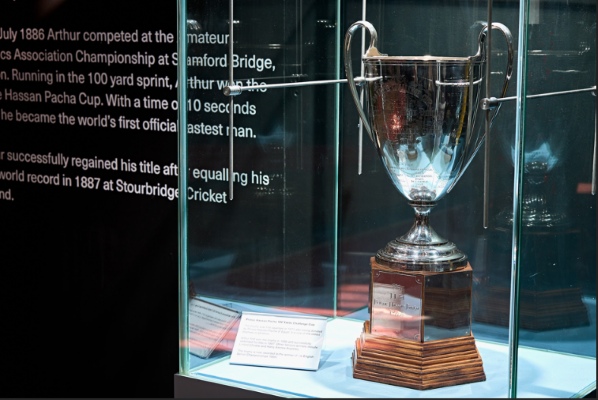
Image courtesy of Hopetown Darlington
Harry Edward enters the Athletics Hall of Fame
The Hassan Pacha Trophy is now heading to Birmingham for England Athletics’ prestigious Hall of Fame evening to honour Harry Edward as he is inducted into the England Athletics Hall of Fame.
Edward was born in Berlin in 1898 to a German mother and a Dominican father. Dominica was a British colony at the time so Edward’s father was classified a British subject, a status which extended to his children. As a result of this Harry was imprisoned in a civilian detention camp for the majority of the First World War as an enemy alien by the Prussian state. Upon release at the end of the War he moved to Britain, settling in London where he worked as a language teacher and excelling at sprinting.
Harry Edward won the Prince Hassan Pacha trophy and the AAA 220 Yard Challenge Cup in 1920, 1921 and 1922. He represented Great Britain at the 1920 Antwerp Olympic Games and took bronze in both the 100m and 200m making him the first Black person to win Olympic medals for which he is celebrated.
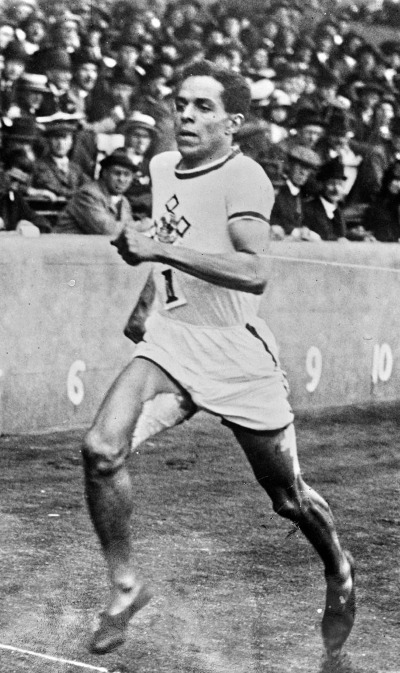
Image: Public domain, via Wikimedia Commons
Read more about Harry Edward’s, his career and his induction into
England Athletics’ Hall of Fame
From Manchester to Darlington and now Birmingham, the Prince Hassan Pacha trophy’s journey is helping new audiences discover the athletes, pioneers and intertwined histories represented by this remarkable object.