1930 Hamilton, Canada
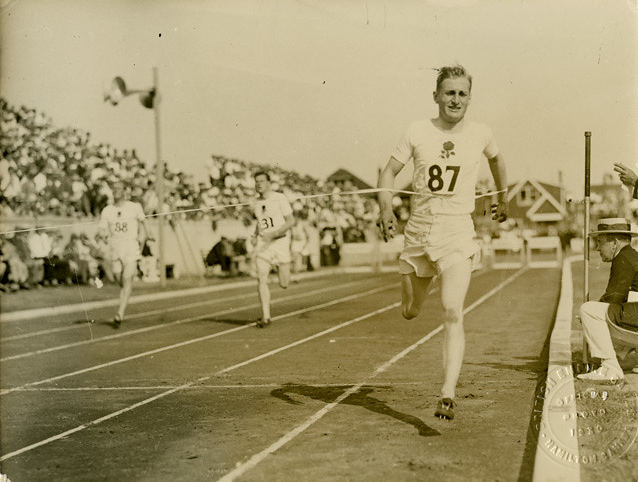
Image: public domain via wiki commons
Inaugural British Empire Games
The first British Empire Games is hosted. Australia, Bermuda, British Guiana, Canada, England, Ireland, Newfoundland, New Zealand, Scotland, South Africa and Wales compete in athletics, boxing, diving, lawn bowls, rowing, swimming and wrestling.
Women are only allowed to compete in swimming and diving.
Lord Burghley wins the 120 yard hurdles, 440 yard hurdles, and 4×440 yard relay for England, and is the most decorated athlete of the Games.
Overall England take 9 gold, 10 silver and 6 bronze medals.
1934 London, England
Women’s athletic events are added to the programme
However, in keeping with the prevailing view that longer distances are detrimental to women’s’ reproductive health, running events are restricted to 110, 220 and 880 yards – and a 660 yard relay comprising two 220 yard legs and two 110 yard legs.
England’s Eileen Hiscock takes a clean sweep of the sprints winning gold in both plus the relay, while Gladys Lunn wins the 880 yards and javelin, and Phyllis Bartholomew takes long jump gold.
On the men’s side Arthur Sweeney matches Hiscock, winning 110, 220 and 4×110 yard relay gold. Its an England clean sweep in the 440 yards, with Godfrey Rampling winning, Bill Roberts second and Crew Stoneley third. Perhaps unsurprisingly the 4×440 yard relay team of these three plus Denis Rathbone also take gold. Malcolm Nokes wins gold in the hammer.
In all, England take 16 gold, 9 silver and 15 bronze medals in athletics.
1938 Sydney, Australia
New events and more countries
Cycling is added to the programme. Fiji and Ceylon join the competition, Newfoundland competes as part of Canada rather than a state in its own right.
England win 14 athletics medals, including four gold. Cyril Holmes wins in the 110 and 220 yards, Dorothy Odam secures a win in high jump and Bill Roberts in the 440 yards.
England finish second on the medal table for the whole games, and fourth for athletics.
1950, Auckland, New Zealand
Returning after World War II
An appetite for sporting competition and something to cheer in the post-War period sees 40 000 people attend the opening ceremony in Auckland and quarter of a million spectators watch 9 sports being contested across the Games.
English athletes travelled by boat, a journey of some six weeks, to compete. They win 14 athletics medals, with gold for pole vaulter Tim Anderson, in the 3 miles for Len Eyre, the marathon for Jack Holden and for John Parlett in the 880 yards. Dorothy Tyler (nee Odam) defends her high jump title after a 12 year break caused by the War.
1954 Vancouver, Canada
The ‘Miracle Mile’
The quest to run a sub-four minute mile has been gripping athletics. England’s Roger Bannister manages it in May 1954 becoming the first man to do so. Australia’s John Landy responds by bettering Bannisters time the following month.
In August 1954 the two meet in the mile final of the Commonwealth Games, Landy leads to the final bend bend but Bannister comes through to take gold. Both athletes finish in under four minutes – the first time two have gone below four minutes in the same race.
England top the medal table in athletics with 25 medals in total. Bannister’s Miracle Mile gets him gold, Chris Chataway wins the 3 miles, Peter Driver the 6 miles. Derek Johnson wins the 880 yards and the 4×440 yard relay team take gold. On the field John Savidge wins shot put gold and Ken Wilmshurst does the double with long jump and triple jump wins.
The name of the competition is changed to the British Empire and Commonwealth Games.
1958 Cardiff, Wales
Largest, Smallest, and the Longest Wait
The 1958 British Empire and Commonwealth Games becomes the largest sporting event – 35 nations sending 1 122 competitors – to be held in Wales, the smallest host nation of the Games.
Cardiff should have hosted in 1946 but these Games did not take place because of the War.
England top the overall Games medal table, with the athletics team contributing significantly.
There are golds for Suzanne Allday in discus, Geoff Elliott in pole vault, Mike Ellis in hammer, Sheila Hoskin long jump, Arthur Rowe in shot put, and Collin Smith in the javelin. The men’s and women’s 4×110 yard relay teams both take gold.
1962 Perth, Australia
“Heat, dust and glory”
Temperatures at the opening ceremony soar up to 105 f (40.5 C) and the Australian Army are deployed to bring water to the athletes.
863 athletes from 35 countries compete in 9 sports.
England’s Robbie Brightwell wins the 440yards, Dorothy Hyman wins gold in the 100 yard & 220 yard sprints. Brian Kilby sets a new games record of 2:21.17 in the marathon to take gold. Martyn Lucking wins shot put, Howard Payne wins the hammer, and Sue Platt the javelin. The men’s 4×110 yard relay team of Mike Hildrey, Peter Radford, Ron Jones & Len Carter win gold.
1966 Kingston, Jamaica

Image: Mark Shearman
Changes afoot
‘Empire’ is dropped from the name of the Games, which are now known as the British Commonwealth Games, signifying a shift in world politics; this is the first Games to be hosted by a non-white majority nation.
England top the overall medal table, with 33 golds, five of which come from athletics. David Hemery wins the 120 yard hurdles, John FitzSimons takes javelin gold, Mary Rand wins long jump gold, Howard Payne defend his hammer title and Ronald Wallwork takes the 20 mile race walk win.
1970 Edinburgh, Scotland
A new measurement
Metric units instead of imperial are used for the first time, and electronic photo-finish technology is introduced.
For England, there are 30 athletics medals, 7 of them gold. David Hemery wins the 110m hurdles title, Ron Hill wins the marathon, Harold Payne wins hammer for the third time, Mary Peters wins the pentathlon, Rita Ridley wins with 1500m, John Sherwood the 400m hurdles and Dave Travis takes javelin gold.
1974 Christchurch, New Zealand

Image Mark Shearman
First time in colour
The Games are broadcast in colour for the first time – or at least, athletics, swimming and boxing are – marking a first for New Zealand Broadcasting.
England tom the athletics medals with 28. Geoff Capes takes gold in shot put, Ian Chipchase in hammer and Charles Clover in javelin. Barbara Lawtown wins high jump and Alan Lerwill long jump. Alan Pascoe takes gold int he 400m hurdles and Ian Thompson wins gold with a Games record marathon time of 2:09.12. Judy Vernon wins the 100m, John Warhurst takes gold in the 20 mile walk and the women’s 4x400m relay team come first.
1978 Edmonton, Canada
Bigger and less British
Edmonton sees the biggest Games yet. Forty-six countries compete across athletics, badminton, boxing cycling, gymnastics, lawn bowls, shooting, swimming and diving, weightlifting, and wrestling.
1 474 athletes take part, and Canada top the medal table for the first time.
‘British’ is dropped from the name, giving us the Commonwealth Games which has endured to the present day.
England win 33 athletics medals with 16 golds. Lorna Booth – 100m, Geoff Capes – shot, Keith Conner – triple jump, Olly Flynn – 30km walk, Brendan Foster – 10 000m, Paula Fudge – 3000m, Donna Hartley – 400m, Sonia Lannaman – 100m, Roy Mitchell – long jump, David Moorecroft – 1500m, Tessa Sanderson – javelin, Mary Stewart – 1500m, and Daley Thompson – Decathlon, all win gold, as do the women’s 4x100m and 4x400m relay teams.
1982 Brisbane, Australia

Image: Mark Shearman
A dead-heat
In the 200m final, Scottish 100m champion Allan Wells and young English athlete Mike McFarlane finish so close together that even the photo-finish can’t separate them. After 25 minutes deliberation the race is declared a dead-heat, with both athletes winning gold in a time of 20.43 seconds.
Alongside this gold, England win ten others: Christina Boxer and Steve Cram takes women’s and men’s 1500m gold respectively, Keith Conner wins triple jump and Dave Moorecroft wins the 5000m. Judy Oakes wins shot, Shirly Strong the 100m hurdles. Daley Thompson obliterates the competition, defending his decathlon title with a winning margin of 406 points, and Bob Weir takes gold in the hammer. In the relays, the men’s 4x400m team and the women’s 4x100m team win,
1986 Edinburgh, Scotland
A tricky moment
Edinburg 1986 sees the effect of politics on sport, with many African, Asian and Caribbean nations boycotting the Games due to the UK government’s sporting ties with apartheid-era South Africa. The Games, which have grown with each iteration until now, sees the lowest athlete attendance since 1950.
The women’s marathon is added to the programme.
With fewer teams competing, England do very well in the medals with 18 athletics golds for Andy Ashurst – pole vault, Roger Black – 400m, Billy Cole – shot, Steve Cram – 800m & 1500m, John Herbert – triple jump, Sally Gunnell – 100m hurdles, Heather Oakes – 100m, Joyce Oladapo – long jump, David Otley – javelin, Steve Ovett – 5000m, Tessa Sanderson – javelin, Judy Simpson – heptathlon, Dave Smith – hammer, Daley Thompson (again!) – decathlon. The women’s 4x100m relay team and men’s 4×400 relay both take gold.
1990 Auckland, New Zealand
Bounce Back
Auckland sees a bounce back after the boycott of the 1986 Commonwealth Games, with a new record of 55 nations sending 2 826 participants.
Synchronised swimming and Judo are added to the program.
England’s men make a clean sweep of the 200m, with Marcus Adam winning gold, John Regis silver and Ade Mafe bronze. The women do the same in shot with Myrtle Augee wining, Judy Oakes taking silver and Yvonne Hanson-Nortey bronze. Kriss Akabusi wins the 400m hurdles, Steve Backley the javelin and Linford Christie takes the 100m title. Diane Edwards takes gold in 800m and Peter Elliott in the 1500m. Sally Gunnell wins the 400m hurdles, Eamonn Martin wins the 1000m with stunning last lap kick, Tessa Sanderson defends her javelin title and Simon Williams wins shot. The women’s 4x4400m and men’s 4x100m relay teams both win gold.
1994 Victoria, Canada

Image: Mark Shearman
Defending champions
England’s Steve Backley – javelin, Linford Christie – 100m, Sally Gunnell 400m hurdles all defend their titles from 1990.
Rob Denmark wins the 5000m, Julian Golley the triple jump. Kelly Holmes wins 1500m and Denise Lewis the heptathlon. Judy Oakes and Mat Simson each take gold in shot and the men’s and women’s teams win the 4x400m relay.
1998 Kuala Lumpur, Malaysia
First time the Games is hosted in Asia
As well as being the first Commonwealth Games to be hosted in Asia, this Games sees the introduction of team sports with cricket, hockey, netball and rugby sevens added to the programme.
In the athletics, England’s Onochie Achike and Ashia Hansen win men’s and women’s triple jump gold respectively, Dalton Grant wins the high jump and Julian Golding wins the 200m. Toney Jarrett takes gold in the 110m hurdles, Denise Lewis defends her heptathlon title as does Judy Oakes in shot put. Joanne Wise wins long jump and Robert Weir discus. Then men’s 4x100m relay team take gold.
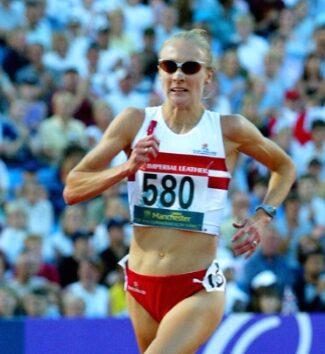
2002 Manchester, England

Image: Mark Shearman
Para integration
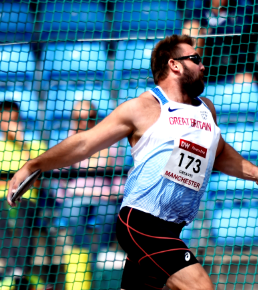
Para events had started to be included from 1994, but 2002 sees the beginning of full integration with para events being woven into the main programme and para medals included overall medal tallies – a first for world sport.
Steve Backley is back to winning ways, taking his third Commonwealth javelin title. Kelly Holmes likewise reclaims her 1500m title. Ashia Hansen defends her triple jump title and Jonathan Edwards wins the men’s triple jump. Mike East takes 1500m gold, Michael Jones and Lorraine Shaw each win hammer gold. There are golds for Nathan Morgan – long jump, and Chris Rawlinson – 400m hurdles, the men’s 4x100m and 4x400m relay teams.
Paula Radcliff sets a Games record of 14:.31.42 for the 5000m, outdistancing the pack and running solo for most of the race.
2006 Melbourne, Australia
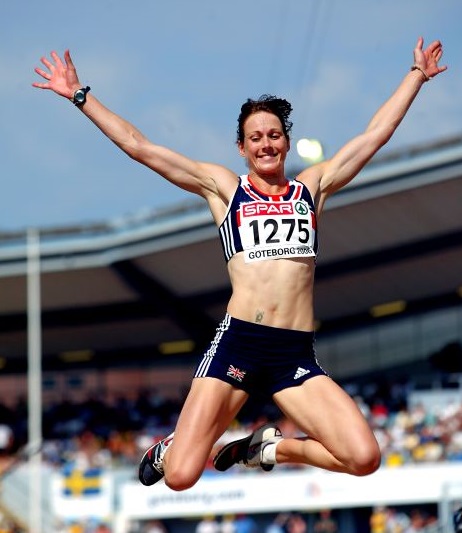
Image: Mark Shearman
Biggest and smallest, again
This time between the team sizes. Hosts Australia, who have been competing since the inaugural Games in 1930, field a team of 535, while the debut team from Montserrat consists of just 4 participants.
There are six athletics golds for England: Lisa Dobriskey – 1500m, Phillips Idowu – triple jump, Dean Macey – decathlon, Nicolas Nieland – javelin, Christine Ohuruogu – 400m, and Kelly Sotherton – heptathlon.
2010 Delhi, India
Bigger, better, and back in Asia
Delhi becomes the second host in Asia, after Kuala Lumpur in 1998. A total of 6572 athletes and officials across 17 sports and para sports are present.
In athletics, England win gold with Leon Baptiste in the 200m, Louise Hazel in heptathlon, Katrina Hart in 100m T37, and Jo Jackson in the 20km walk.
2014 Glasgow, Scotland

Image: Mark Shearman
Inclusion
17 sports, the biggest number yet of para-medal events and a ground-breaking partnership with UNICEF which sees £5million raised to help children throughout the Commonwealth.
In the athletics, the men’s 4x400m relay team win gold, as do Dan Greaves in F42/44 discus, Steven Lewis in pole vault and Greg Rutherford in long jump. and David Weir in T54 1500m.
2018 Gold Coast, Australia
Equality
The first major multi-sport event to offer the same number of medal events to male and female competitors.
Men’s and women’s 4x100m relay team both win gold for England in the athletics, as do Sophie Hann in T38 100m, Katerina Johnson-Thompson in heptathlon and Nick Miller in hammer.
2022 Birmingham, England
Most inclusive yet…
Building on from Glasgow eight years prior, Birmingham now takes the most inclusive Games to date title, with the largest number of para events yet featured and fully integrated throughout the Games programme, and a record number of women’s events.
The English athletics and para-athletics team take an historic haul of 34 medals, with seven golds among them.
Katerina Johnson-Thompson defends her heptathlon title from 2018. Nathan Maguire takes gold in the T54 1500m, Nick Miller wins hammer gold, Emmanuel Oyinbo-Coker wins the T47 100m, and Johnboy Smith wins the wheelchair marathon having come second four years prior.
The men’s 4x100m and women’s 4x400m relay teams both secure top spot.
2026 Glasgow, Scotland
TBC
Games incoming – watch this space